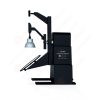
LM-79 Hareketli Dedektör Gonyofotometre (Ayna Tip C)
LSG-6000
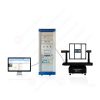
Yüksek Hassasiyetli Dönme Armatürü Goniofotometre
LSG-1890B
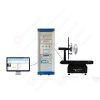
Yüksek Hassasiyetli Dönme Armatür Goniospektroradiyometre
LSG-1890BCCD

Otomotiv ve Sinyal Lambaları için Goniyotometre
LSG-1950
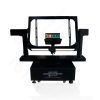
Trafik Sinyal Lambaları için Goniyotometre
LSG-1950S
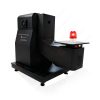
VAD Yangın Alarmı Görsel Uyarı Cihazı Goniophotometre
LSG-1930
Kompakt Goniofotometre
LSG-1200A
LED Goniophotometre
LSG-1100
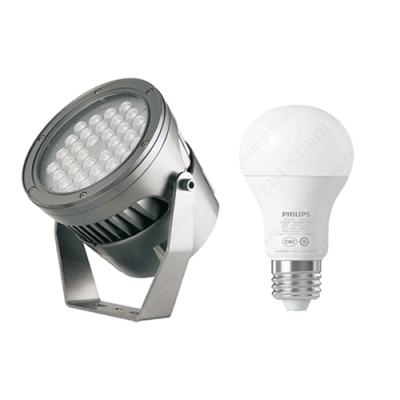 LED'ler ve Armatür Test Çözümleri
 LM-79 hem de LM-80 Test Çözümleri
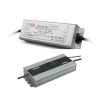 LED Sürücü Test Çözümleri
 Ev Aletleri Test Çözümleri
 Mobil ve Ağ Test Çözümleri
 Otomotiv Elektroniği Test Çözümleri
 Ses-Görüntü ve BT Test Çözümleri
 Kablo ve Tel Test Çözümleri
 Fişler ve Prizler Test Çözümleri
 Güç Anahtarı Test Çözümleri
 Transformatör Test Çözümleri
 Elektrikli Oyuncak Test Çözümleri
 Enerji Ölçer Test Çözümleri
 Motorlu Alet Test Çözümleri
Bir kuruluş seçin
standartlara göz atmak
Özet
Reduced visibility caused by smoke during fire accidents is a major contributor to casualties. Quantitative testing of smoke‑generating characteristics for burning materials serves as a critical procedure for fire safety evaluation. As a classic smoke density testing instrument, the NBS Smoke Density Chamber is widely adopted in test procedures of international standards including ASTM E662 and ISO 5659‑2. The smoke density test chamber | NBS smoke density chamber is a professional smoke density testing device complying with ISO 5659‑2. Based on the light attenuation principle inside a sealed cavity, it simulates thermal decomposition and combustion conditions of materials via a conical radiant heat source. Cooperating with a high‑precision photoelectric optical system, it accurately detects and converts key parameters such as smoke transmittance, specific optical density and mass loss rate after material combustion. Centered on the LISUN LS‑ISO5659 smoke density test chamber | NBS smoke density chamber, this paper describes the test principle, system composition and ASTM E662 test workflow of the NBS Smoke Density Chamber. It compares the differences between ISO 5659‑2 and ASTM E662, introduces core technical specifications, test modes and industrial application scenarios of the equipment, and explains equipment selection and test operation guidelines. It provides references for flame‑retardant material research and third‑party compliance testing in rail transit, aerospace, wire and cable, building material and other industries.
In various fire incidents, smoke generated by combustion not only contains toxic components, but also rapidly reduces spatial visibility and hinders evacuation. Evaluating the smoke production capacity of non‑metallic solid materials under thermal decomposition or combustion has become an essential assessment item for material safety approval. ASTM E662 is a widely‑accepted North‑American standard for measuring the specific optical density of smoke produced by solid materials, with the NBS Smoke Density Chamber as its test carrier. Originated from the National Bureau of Standards, this test method quantifies smoke concentration according to beam attenuation inside a closed chamber to realize objective evaluation of smoke generation performance.
MKS NBS Duman Yoğunluğu Odası can simulate flaming combustion and non‑flaming pyrolysis conditions to restore different heating states of materials in real fires. The smoke density test chamber | NBS smoke density chamber is a professional smoke density testing device complying with ISO 5659‑2. Based on the light attenuation principle inside a sealed cavity, it simulates thermal decomposition and combustion conditions of materials via a conical radiant heat source. Cooperating with a high‑precision photoelectric optical system, it accurately detects and converts key parameters such as smoke transmittance, specific optical density and mass loss rate after material combustion. LISUN LS‑ISO5659 is the basic‑version NBS Smoke Density Chamber that meets ISO 5659‑2. The upgraded LS‑ISO5659‑E662 supports ASTM E662 requirements. A single unit can satisfy two mainstream international smoke density standards for non‑metallic solid samples such as wire and cable materials, plastics, decorative building materials, rail‑transit components, aerospace materials and new‑energy insulation parts. It supports product development, factory quality inspection and third‑party compliance verification.
The core detection principle of the NBS Smoke Density Chamber is the sealed‑cavity light attenuation method. Specimens are placed inside the closed test cabinet. Under controlled radiant heat, the specimen undergoes pyrolysis or combustion, and the generated smoke diffuses throughout the sealed chamber. Smoke particles absorb and scatter the parallel light beam passing through the cabinet, resulting in attenuation of optical signal. The photoelectric receiver captures the light signal transmitted through smoke. Combined with geometric parameters of the cavity, transmittance and specific optical density are calculated. A high‑precision weighing module records weight variation before and after combustion to obtain the mass loss rate. Automatic data acquisition and calculation reduce manual reading errors and guarantee test accuracy and repeatability.
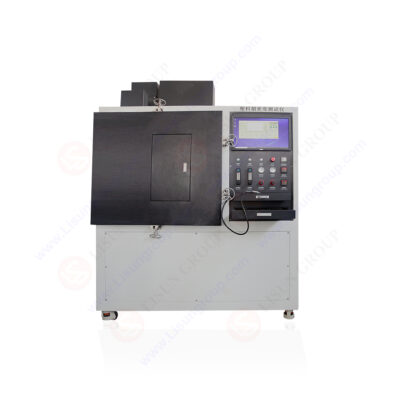
LS-ISO5659_NBS Smoke Density Chamber
A complete NBS Smoke Density Chamber consists of cabinet pressure‑temperature control unit, conical radiant heater, ignition and gas supply system, specimen mounting and weighing assembly, optical detection system, heat flux meter and computer control system. The sealed steel cabinet has an internal dimension of 914mm×914mm×610mm with PTFE‑coated inner walls to resist smoke corrosion. The chamber is equipped with an explosion‑proof aluminum foil disc, upper and lower optical windows, air ports and a differential pressure transmitter to maintain sealing pressure during testing. The conical radiant heater provides adjustable radiant heat flux ranging from 10kW/㎡ to 50kW/㎡, and K‑type thermocouples monitor cone temperature rise in real time. The ignition and gas supply unit adopts MFC mass flow controllers to precisely regulate propane and air flow and achieve stable ignition under flaming conditions. The specimen weighing module reaches 0.01g resolution with thermal insulation protection to record real‑time specimen mass and calculate mass loss rate. The optical system uses a Hamamatsu photoelectric amplifier with multi‑gear filter switches to ensure optical measurement accuracy. The whole equipment is operated through guided software on a personal computer. The PLC controls actuator movement and signal acquisition, and automatically completes data calculation, curve plotting and report generation. The table below lists key hardware parameters of the LISUN LS‑ISO5659 series NBS Smoke Density Chamber.
| Sistem birimi | Temel Teknik Parametreler | Ek Açıklama |
|---|---|---|
| testi Odası | Internal dimension 914mm×914mm×610mm, PTFE‑coated inner wall, differential pressure measurement from 0‑2.5kPa | Sealed steel structure with explosion‑proof protection |
| Radiant Cone Heater | 2.2kW power, radiant flux 10‑50kW/m², three‑point temperature monitoring by K‑type thermocouples | 25mm gap between cone base and specimen, adjustable to 50mm for intumescent samples |
| Ignition & Gas Supply System | Propane MFC: 0‑100ml/min; Air MFC: 0‑500ml/min, 10kV high‑voltage pulse ignition | Stable 30±5mm horizontal pilot flame output |
| Specimen Weighing Module | Measuring range 0‑3000g, accuracy 0.01g, thermal‑insulated structure | Real‑time specimen mass acquisition for mass loss rate calculation |
| Photoelectric Optical System | 6.5V incandescent lamp, Hamamatsu photoelectric amplifier, measurement accuracy 0.1%, automatic multi‑gear filter switching | Used for transmittance and specific optical density calculation |
| Isı Akısı Ölçer | Range 0‑100kW/m², accuracy ±3%, water‑cooled receiving target | Calibrate actual radiant heat flux of the cone heater |
| uygulanabilir Standartlar | Basic version: ISO 5659‑2; Upgraded LS‑ISO5659‑E662 additionally supports ASTM E662 | The upgraded unit complies with two international smoke density standards |
ASTM E662 testing with an NBS Smoke Density Chamber includes five major phases: specimen preparation, equipment calibration, condition configuration, test execution and data processing. Specimens are prepared to required dimensions and conditioned as specified by the standard. Operators perform optical zero calibration, calibrate radiant heat flux with a heat flux meter, verify chamber air‑tightness and check the status of gas supply, ignition and weighing modules. ASTM E662 defines two test conditions: non‑flaming pyrolysis and flaming combustion. The non‑flaming mode applies radiant heat without pilot flame to simulate smoke generation from thermal decomposition. The flaming mode enables the propane pilot flame to simulate smoke release after ignition by open fire.
After starting the test, the software of the NBS Smoke Density Chamber continuously records beam transmittance, specimen weight, chamber pressure and temperature, generates transmittance‑time curves and automatically calculates time‑dependent specific optical density curves. After the test finishes, the software exports core indicators including maximum specific optical density, smoke generation trend and mass loss rate. It should be noted that ASTM E662 and ISO 5659‑2 differ in specimen orientation, test duration and heat flux settings. Operators shall adjust specimen brackets, heat‑source spacing and program parameters when switching standards to avoid deviation caused by mixed test conditions. The NBS Smoke Density Chamber stores all raw test data for report traceability and meets quality‑management requirements for third‑party laboratories.
The NBS Smoke Density Chamber is widely used in the wire‑and‑cable industry to evaluate smoke generation of insulation and sheath materials under combustion. For rail‑transit projects, it performs fire‑safety assessment on carriage interior parts and non‑metallic components. In the aerospace sector, it characterizes smoke performance of cabin non‑metallic materials. For construction‑decoration applications, it tests smoke grades of plastic panels, thermal‑insulation materials and decorative fabrics. New‑energy industries conduct smoke‑density tests on insulating gaskets and composite packaging materials. It also serves research institutes and third‑party testing organizations for new‑material development and compliance certification.
Laboratories purchasing an NBS Smoke Density Chamber shall clarify target standards. LS‑ISO5659 is suitable if only ISO 5659‑2 is required. The upgraded LS‑ISO5659‑E662 is recommended for laboratories that also need ASTM E662 reports. Buyers shall pay attention to optical measurement precision, weighing‑module resolution and radiant‑flux calibration capability. Laboratories issuing formal inspection reports shall select metrologically traceable instruments. During daily operation of the NBS Smoke Density Chamber, regular chamber cleaning is required. Smoke residue contaminates optical lenses and inner walls and causes transmittance drift. Operators shall verify the integrity of explosion‑proof discs and gas‑circuit tightness before testing. As a precision instrument, the heat flux meter shall be calibrated periodically to guarantee accurate radiant‑heat output.
MKS NBS Duman Yoğunluğu Odası is an indispensable instrument for ASTM E662 smoke‑density measurement, which quantifies fire smoke through the sealed‑cavity light‑attenuation principle. The smoke density test chamber | NBS smoke density chamber is a professional smoke density testing device complying with ISO 5659‑2. Based on the light attenuation principle inside a sealed cavity, it simulates thermal decomposition and combustion conditions of materials via a conical radiant heat source. Cooperating with a high‑precision photoelectric optical system, it accurately detects and converts key parameters such as smoke transmittance, specific optical density and mass loss rate after material combustion. The LISUN LS‑ISO5659 series NBS Smoke Density Chamber is equipped with complete hardware and supports both non‑flaming pyrolysis and flaming combustion modes. The upgraded LS‑ISO5659‑E662 complies with ASTM E662. During practical testing, operators shall distinguish condition differences between ASTM E662 and ISO 5659‑2, complete equipment calibration, chamber maintenance and parameter configuration. Giving full play to the measurement capacity of the NBS Smoke Density Chamber helps obtain reliable smoke‑generation data and provides solid support for fire‑safety evaluation of various non‑metallic materials.
Etiketler:LS-ISO5659E-posta hesabınız yayımlanmayacak. Gerekli alanlar işaretlendi *

 İngilizce
 中文简体
中文简体 Русский
 Español
 Português
 Türkçe
 العربية
 Deutsch
 Polski
 Italiano
 Français
 한국어
한국어 ไทย
ไทย Tiếng Việt
 日本語
日本語